U.S. Coast Guard Migrant and Drug Interdictions
Maritime migration and drug smuggling are central to security and humanitarian policy in the Caribbean basin and the Eastern Pacific, yet granular data on interdiction are hard to come by. Through a series of Freedom of Information Act (FOIA) requests, I assembled declassified U.S. Coast Guard records of every maritime migrant interdiction from FY1982 through FY2017, together with case-level records of the Coast Guard’s drug interdictions and cocaine removals over the same period.
Migrant interdictions
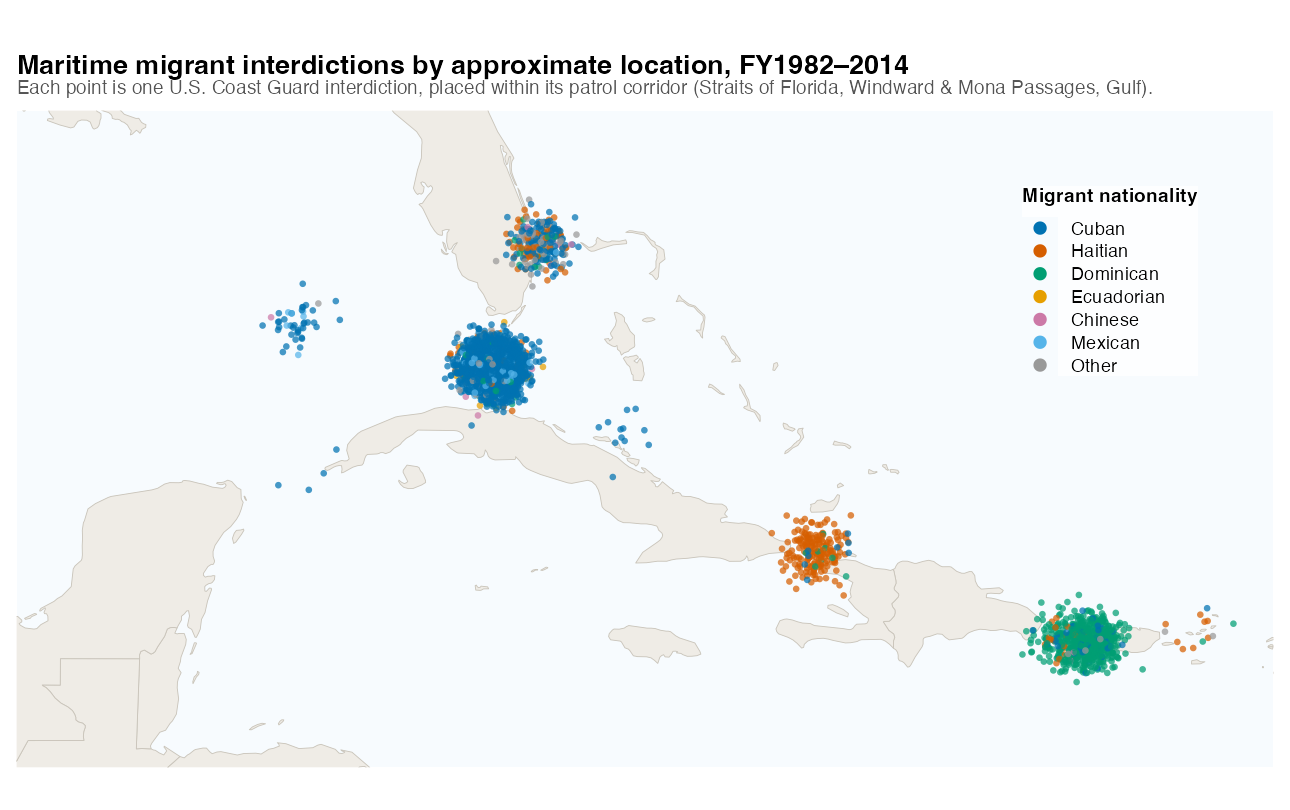
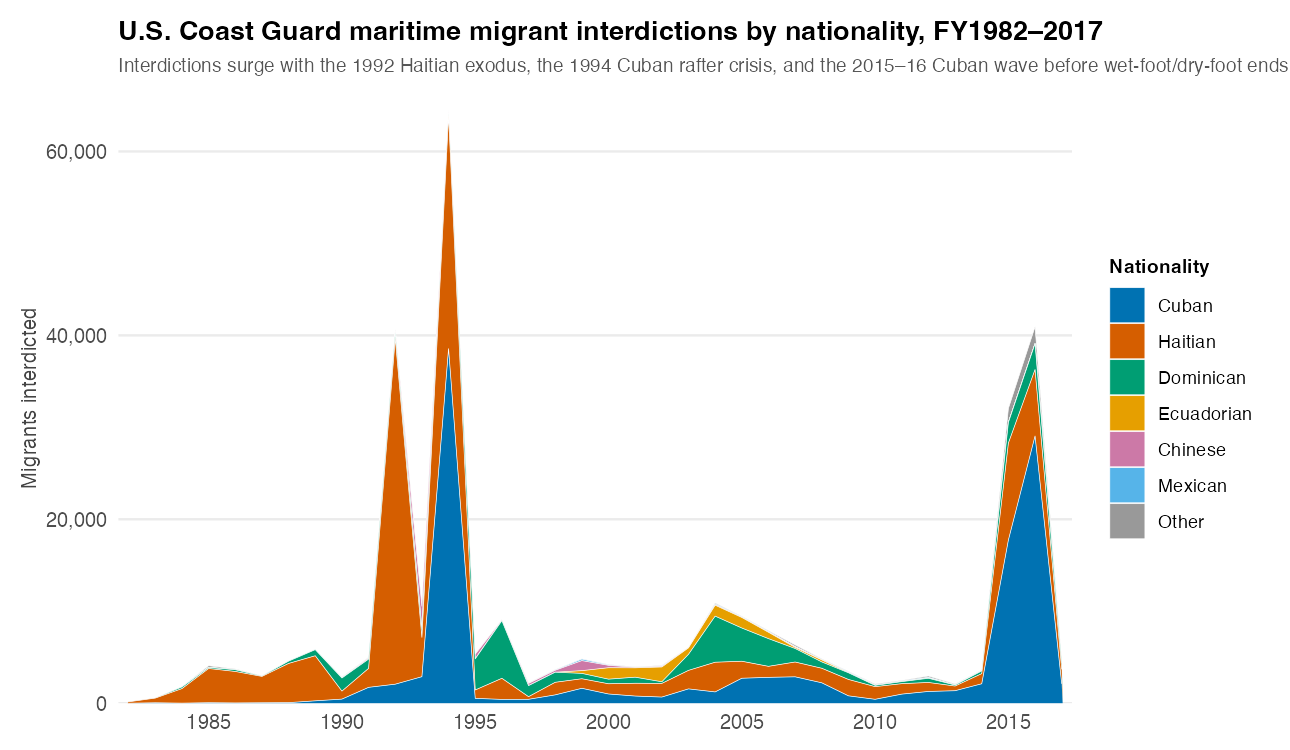
Each migrant interdiction case records the date and location; the U.S. Coast Guard district and patrol corridor — the Straits of Florida, the Windward and Mona Passages, and the Gulf of Mexico; the number of migrants and their nationalities — chiefly Cuban, Haitian, and Dominican, alongside Ecuadorian, Chinese, and Mexican; the interdicting cutter or aircraft and the migrant vessel type; and the disposition of each case, whether repatriation, transfer to Guantánamo, or entry.
Drug interdictions
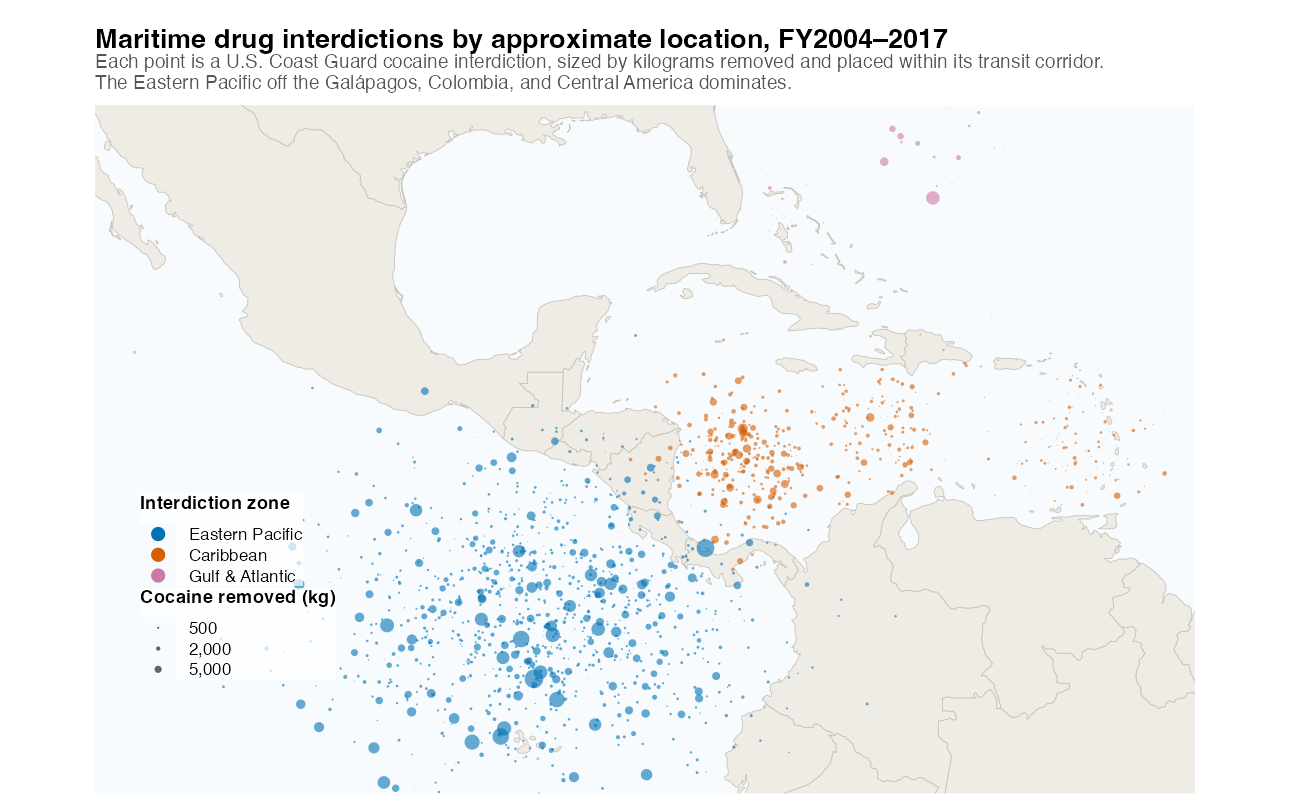
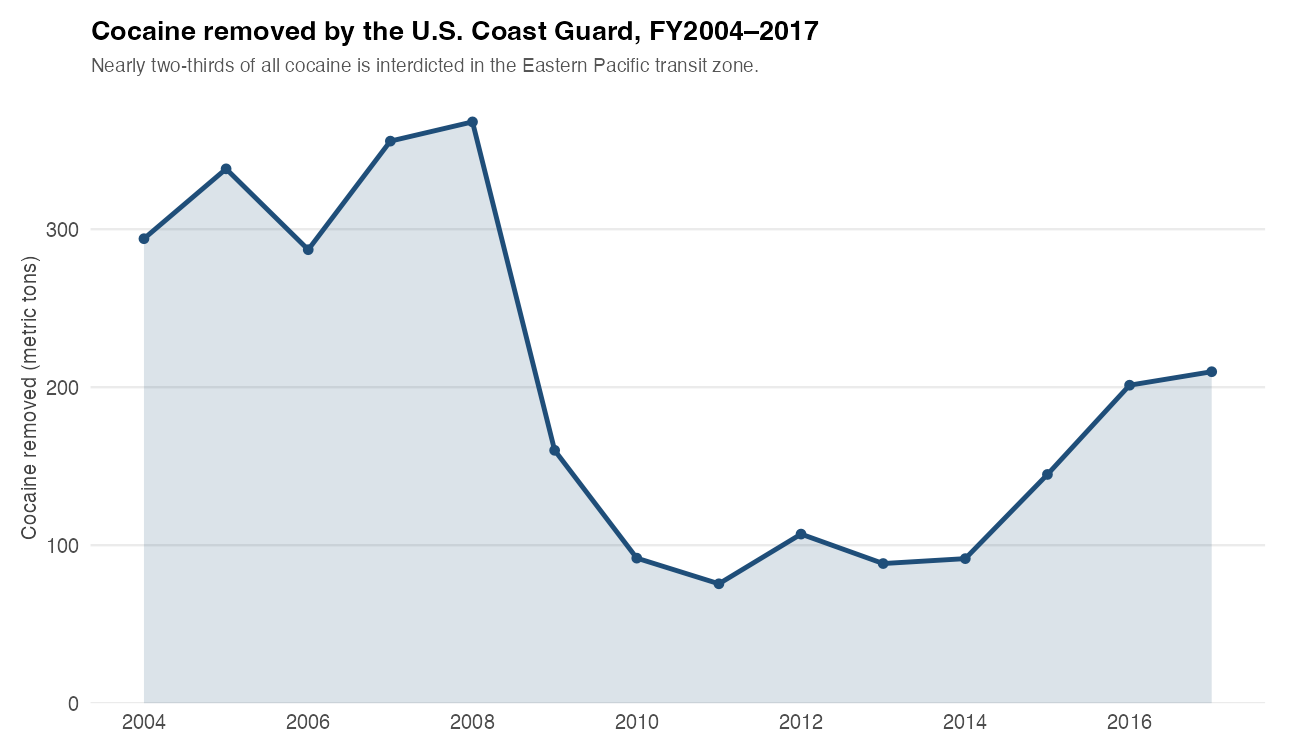
The drug records document each maritime interdiction — the date, location, and transit corridor; the interdicting cutter; the smuggling vessel and its flag state; and the quantity of cocaine and other narcotics seized and removed. Interdiction is overwhelmingly concentrated in the Eastern Pacific transit zone off the Galápagos, Colombia, and Central America, which accounts for nearly two-thirds of all cocaine removed, with a second concentration in the western Caribbean.
Availability: these data are available upon request.